

Climate, Health and Equity Brief
When federal guardians retreat
February 27, 2026
The Climate, Health & Equity Brief is GMMB’s take on the latest news on the current impacts of climate change. If you haven’t subscribed yet, you can do so by clicking here.
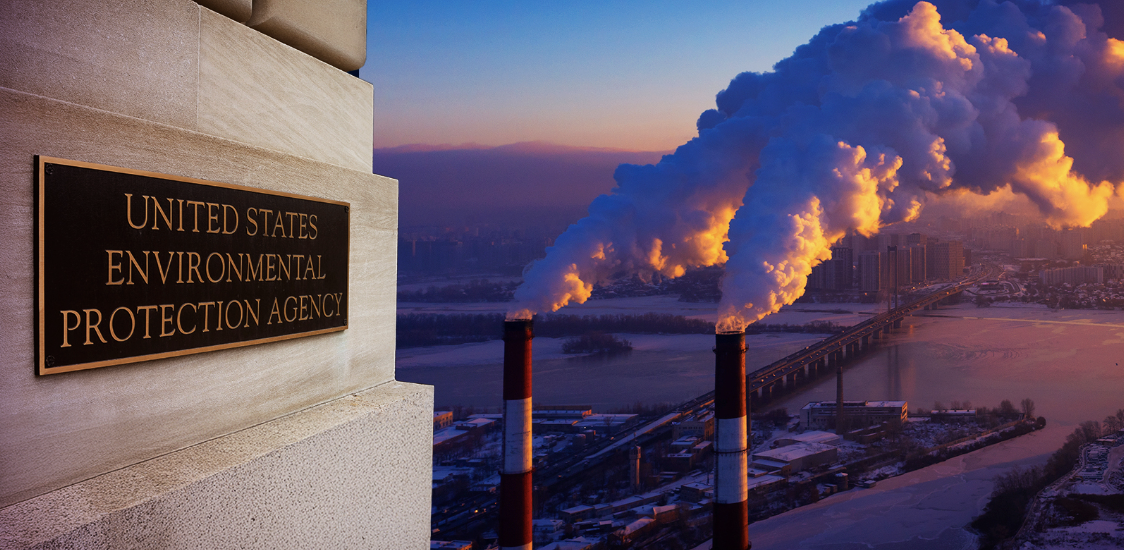
Hot Topic: Endangered. On February 12, Mr. Trump’s EPA finalized its repeal of the 2009 Endangerment Finding — the agency’s determination that greenhouse gases threaten public health and welfare. If upheld, it would reshape not just current policy, but the legal rationale available to future administrations seeking to curb climate pollution at a time when the health and economic costs of climate impacts are clearer than ever.
The Endangerment Finding traces back to the Supreme Court’s 2007 decision in Massachusetts v. EPA, which established that greenhouse gases qualify as air pollutants under federal law and paved the way for federal climate regulation. Legal challenges to the repeal are almost certain and are widely expected to reach the Supreme Court.
For years, federal limits on climate and air pollution have helped curb emissions linked to serious health risks. These include limits on vehicle tailpipe pollution, methane leaks from oil and gas operations, emissions from power plants, and other safeguards designed to reduce smog and toxic air pollution. Experts warn that weakening those protections would carry real consequences for Americans, particularly communities already facing higher pollution exposure and elevated rates of respiratory illness.
From here, much of the fight shifts to the courts. In the short term, state policies, market forces, and continued investment in clean energy are still likely to drive emissions reductions. But progress is expected to slow without major EPA rules tied to the Endangerment Finding. If the repeal survives judicial review, it will substantially limit the legal tools available to future administrations seeking to curb climate pollution, shifting more responsibility to courts, states, cities, and communities.
That shift is already underway. The Supreme Court’s decision this week to hear Boulder’s case against fossil fuel companies highlights the growing role of courts in addressing climate harms. Further developments this month show that state and local governments are advancing clean energy policies, defending projects in court, and pursuing new avenues to hold polluters responsible in the absence of federal leadership.
Human Health
The EPA’s decision to stop calculating lives saved when setting major air-pollution limits could weaken clean-air protections and expose Americans to greater health risks by prioritizing industry costs over public health. (Nonprofit Quarterly)
A new study found that rising temperatures are accelerating antibiotic-resistant infections across the Western Pacific, with each 1°C increase linked to higher mortality from drug-resistant pathogens. (News Medical)
A new study found that chronic exposure to wildfire smoke contributed to an average of 24,100 deaths annually in the lower 48 states from 2006 to 2020, with neurological diseases showing the largest increase and rural and younger communities appearing most vulnerable. (CBS News)
As the U.S. Southeast increasingly faces heavier rains and record heat, residents of aging, water-damaged housing are facing a growing but poorly regulated mold crisis that threatens their health and outpaces public policy. (Grist)
Planetary Health
NASA data found that the last 30 years represent the fastest warming period since tracking began in 1880, with warming accelerating 42% over the past decade alone. (The Washington Post)
A new study finds that human-caused climate change has nearly tripled “fire-weather” days globally since 1979, creating more frequent hot, dry and windy conditions that raise the risk of extreme wildfires and strain firefighting resources. (AP)
Equity
Black women face the highest asthma-related mortality rates in the U.S, and experts warn the EPA’s decision to weaken pollution regulations will worsen their outcomes. (The 19th)
Politics & Economy
The Supreme Court has agreed to hear a major case that could decide whether states and cities can pursue billions of dollars in climate damage lawsuits against fossil fuel companies over alleged deception about greenhouse gas risks. (The Washington Post)
A new watchdog report finds that in the first year of Mr. Trump’s second term, the EPA filed just 16 civil enforcement cases—a 76 percent drop from President Biden’s first year—marking a sharp pullback in holding polluters accountable. (Inside Climate News)
Walmart’s rise to a $1 trillion valuation comes as the retail giant acknowledges it is likely to miss key near-term climate targets, highlighting how rapid business growth and supply-chain emissions are outpacing progress toward its net-zero goals. (Carbon Credits)
A new poll by Trump’s longtime pollster finds that a majority of GOP-leaning voters support utility-scale solar power, particularly when panels are U.S.-made, even as Trump-aligned policymakers move to curb renewable energy policies. (Axios)
Florida’s Department of Government Efficiency is using a discredited DOE report to challenge local spending on EVs, renewable energy, and climate resilience, and Republican AGs are citing the same report to challenge climate science in judicial materials. (E&E News)
Administration Watch:
- The EPA repealed its 2009 endangerment finding, eliminating the scientific reasoning that allowed the federal government to protect public health from climate pollution. (POLITICO)
- The Trump administration is stalling federal approvals for renewable wind and solar projects nationwide. (The New York Times)
- Mr. Trump ordered the Pentagon to buy electricity from coal plants to power military installations and awarded $175 million to upgrade coal plants in Appalachia. (The New York Times, POLITICO)
- The Trump administration has frozen nearly $135 million in federal funding for Democratic-led states to build EV charging stations. (POLITICO)
-
The Department of Homeland Security has restricted FEMA staff travel to disaster-affected areas due to a funding lapse. (The Washington Post)
-
U.S. Energy Secretary Chris Wright said the U.S. will pressure the International Energy Agency to abandon its net-zero agenda and could withdraw from the organization if it fails to reform. (CNBC)
-
The EPA has weakened mercury limits for coal plants, allowing them to release more of the neurotoxin linked to brain damage. (The New York Times)
- The EPA re-approved contentious weedkiller for use on genetically engineered crops, reversing a federal court ban despite proof that it drifts and poisons nearby organic crops. (The New York Times)
Action
Environmental and health groups filed the first lawsuit challenging the EPA’s elimination of the endangerment finding, with the legal battle expected to eventually reach the Supreme Court. (The New York Times)
Dozens of countries are pressing for a global tax treaty to make fossil fuel firms pay for climate damage and tax the ultra-rich, though developing nations warn the draft has been watered down and lacks strong support from wealthy countries. (The Guardian)
Democratic-led states are accelerating EV incentives, expanded solar development and new fossil-fuel accountability measures in an effort to continue cutting greenhouse gas emissions in the absence of federal leadership. (The New York Times)
A federal judge ruled that construction on New York’s Sunrise Wind offshore wind farm can resume, marking the Trump administration’s fifth court loss in its efforts to stop wind projects in the name of national security. (The New York Times)
Amsterdam and Florence have approved bans on fossil fuel ads in public spaces—making Amsterdam the first capital and Florence the first Italian city to do so—joining a fast-growing global push to curb promotion of high-carbon products. (Earth.org)
Life as We Know It
Recent layoffs at The Washington Post gutted the climate desk, bringing an abrupt halt to the paper’s era of award-winning climate journalism. (Yale Climate Connections)
Record-low snowpack and an unusually warm winter across the American West have closed ski runs, strained Colorado River supplies and raised wildfire risks, leaving communities bracing for economic losses and water shortfalls. (The Washington Post)
Avalanche experts warn that the extreme snow and unstable conditions linked to this month’s deadly Tahoe slide could become a “new normal” as climate change drives more erratic winter weather and heightens backcountry risks across the West. (San Francisco Chronicle)
Kicker
With state and local action on climate now more important than ever, check out how localities nationwide are working toward a more resilient future. (The New York Times)
“The EPA has abandoned science, abandoned the law, and abandoned the American people.”
-Earthjustice
The GMMB Climate, Health & Equity Brief would not be possible without the contributions of the larger GMMB team—Catherine Ahmad, Stefana Hendronetto, Nikki Melamed, Kenzie Perrow, Krishna Rajpara, and Marci Welford. Feedback on the Brief is welcome and encouraged and should be sent to [email protected].