
Climate, Health and Equity Brief
Scientific clarity, diplomatic drift
December 1, 2025
The Climate, Health & Equity Brief is GMMB’s take on the latest news on the current impacts of climate change. If you haven’t subscribed yet, you can do so by clicking here.
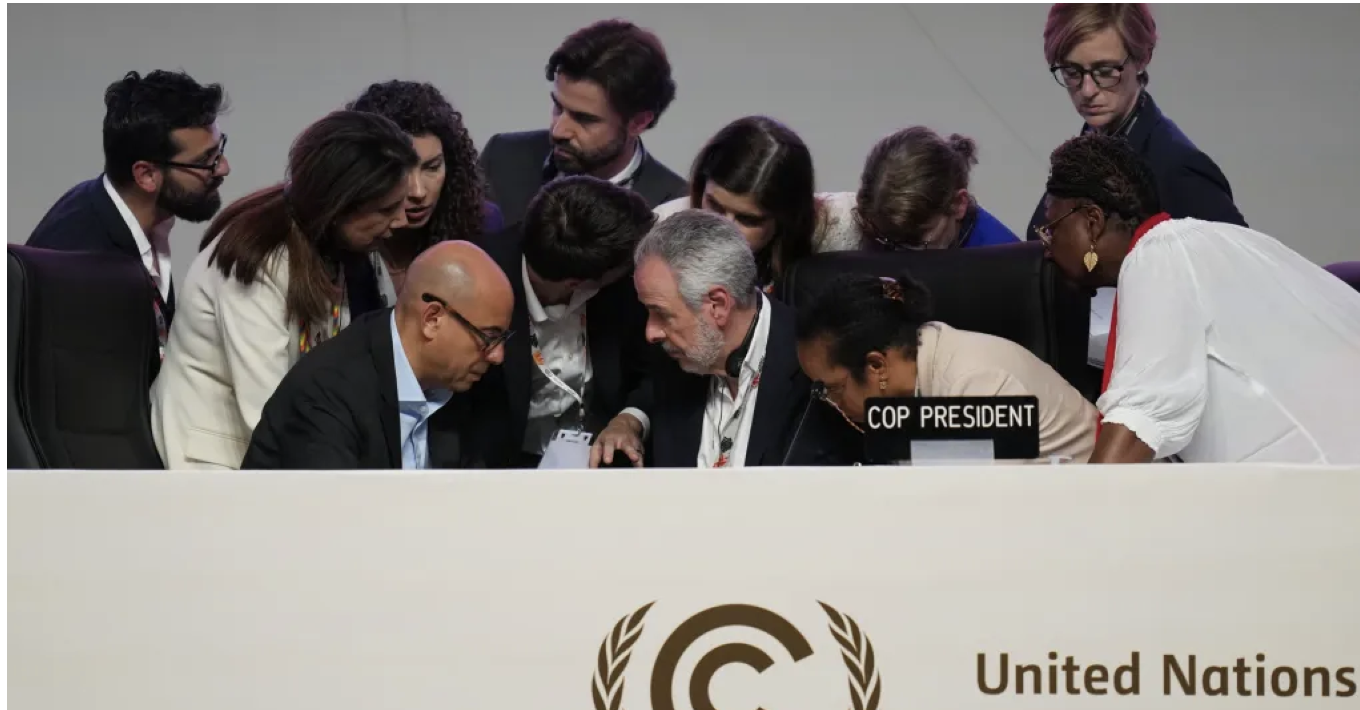
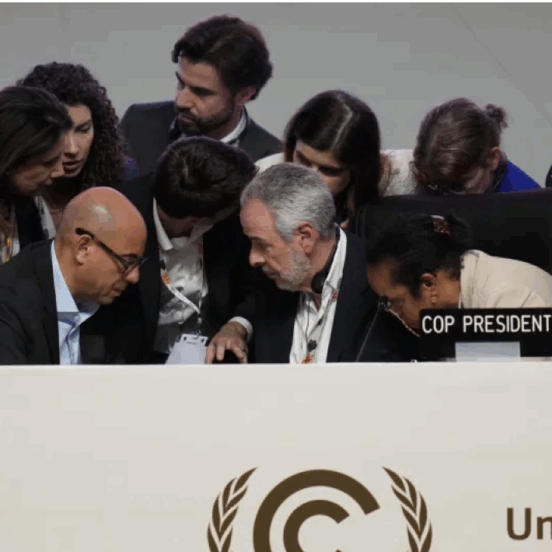
Hot Topic: Abdication. The UN’s COP30 climate talks closed last week with a stark truth: when decisive action was needed, global leaders failed to deliver. They left Belém, Brazil, without commitments to phase out fossil fuels, end deforestation, or strengthen 2030 emissions targets, despite overwhelming scientific consensus on all three.
With the U.S. absent, China stepped in but not up. It highlighted a new 2035 emissions goal and recent declines at home, yet its ambition still falls short of what science—and its global footprint—demand, and it resisted stronger fossil-fuel language in the final deal.
Delegates approved measures that improve coordination but don’t directly cut emissions, including:
- A pledge to triple adaptation funding by 2035 for climate-vulnerable countries
- A new UN discussion on aligning climate policy with global trade
- Two initiatives—the Global Implementation Accelerator and the Belém Mission to 1.5—to help countries convert climate pledges into projects
- Two non-binding “Belém Roadmaps” that offer guidance on forest protection and transitioning from fossil fuels, but do not require countries to act.
These steps acknowledge that climate change is a threat that must be reckoned with, but they fall far short of what the world needed from COP30: hard commitments and structural change. New research makes the gap even starker. First, a UN analysis reports that 250 million people have been displaced by climate disasters in the past decade and warns that nations facing extreme exposure could jump from 3 to 65 by 2040. Second, the Global Carbon Project predicts record emissions in 2025, putting the world on course to exceed 1.5°C within four years.
A silver lining is hard to find—especially here in the U.S., as climate action remains under attack—but this month’s elections offered one. Voters backed candidates and policies that tie climate action to lower costs, cleaner energy, and more reliable infrastructure. Even in politically mixed states, measures funding resilience and clean-energy projects passed easily. The message is clear: Americans are choosing climate solutions that make life more affordable and secure. For that, this holiday season, we’re choosing to be grateful.
Editor’s note: The Climate, Health, and Equity Brief will be on holiday hiatus for the remainder of the year. Warm wishes to you and yours for a peaceful and restorative season.
Human Health
A new Lancet report says that rising global heat now causes one death per minute, warning that millions are dying each year from climate impacts driven by fossil fuel use and inadequate climate action. (The Guardian)
The World Health Organization warns that extreme heat and grueling labor conditions in the Gulf are driving a wave of chronic kidney failure among young Nepali migrant workers, revealing a broader climate-linked public health crisis. (Grist)
Warming temperatures are expanding the range of disease-carrying mosquitoes, with South America and Europe experiencing the most significant yellow fever and dengue outbreaks in decades. (The Guardian)
Planetary Health
A new report warns that emissions will hit a record high in 2025—rising in the U.S. and E.U. but slowing in China and India—putting the world on track to exceed the UN’s 1.5°C warming limit in just four years despite rapid growth in renewable energy. (The Washington Post)
A new analysis found that carbon emissions in China, the world’s biggest polluter, have remained flat or declined every month since March 2024. (Carbon Brief, The Guardian)
A new report found that record wildfires, rising temperatures and drought are weakening northern hemisphere forests’ ability to absorb carbon, pushing them toward a tipping point where they could become net emitters and undermine global climate goals. (Reuters)
Equity
A new report finds the wealthiest 0.1% in the U.S. burn carbon at 4,000 times the rate of the world’s poorest 10%. (The Guardian)
An analysis of nearly 650 major climate-finance projects finds that less than 3% of global climate-mitigation aid supports a just transition for workers and communities. (The Guardian)
A new report finds that weather-related disasters have displaced 250 million people over the past decade and warns that climate change is compounding the challenges faced by those already fleeing conflict. (Al Jazeera)
Politics & Economy
Administration Watch:
- Mr. Trump’s fossil-fuel agenda and absence from global climate talks helped shape a weak COP30 deal that sidestepped calls to cut fossil fuels. (POLITICO)
- The Trump EPA is dropping a Biden-era limit on fine-particle pollution, urging a court to scrap the rule despite scientific findings that it would have saved thousands of lives. (The Washington Post)
- A new analysis has found that the Trump administration’s anti-climate approach could result in 1.3 million more deaths globally due to increased emissions and higher temperatures. (The Guardian)
- The USDA terminated over $3 billion in grants by using keywords like “diversity” and “environmental justice” to identify which to cut. (Reuters)
- The Trump administration plans to allow offshore oil and gas drilling in California for the first time in over four decades. (The New York Times)
- A new proposal from the Trump administration would significantly decrease the amount of federally protected wetlands. (The Washington Post)
- The Trump administration failed to renew the contract for the Park Service’s only engineer overseeing methane control at 93 abandoned oil and gas wells. (The New York Times)
Oil-producing nations scored a major win at COP30 as the summit ended with a weakened agreement that avoided any direct call to reduce fossil fuels, prompting widespread criticism from countries and scientists who say it ignores the urgency of the climate crisis. (The New York Times)
For the first time in thirty years, top U.S. officials and American CEOs skipped COP, reflecting a shift in corporate tone amid Trump’s rollback of climate policies and concerns about political blowback. (The New York Times)
Brazil has halved Amazon deforestation to an 11-year low, yet it has just granted its first-ever oil exploration license near the Amazon River mouth, drawing accusations of climate hypocrisy as it hosts COP30. (The New York Times)
At COP30, tech firms and some countries touted AI’s potential to boost grid efficiency, forecast weather, and track ecosystems, while climate groups warned of AI data centers’ growing electricity and water demands and pressed for guardrails to curb environmental impacts. (AP News)
Action
The Tropical Forests Forever Facility, launched at COP30 with $5.5 billion in funding, will pay countries and Indigenous communities for proven forest protection, offering a simpler, more reliable alternative to traditional carbon offsets. (Inside Climate News)
Brazil used COP30 to recognize 10 new Indigenous territories—an expansion that studies say can sharply curb deforestation—as protests, tight security, and violence against Indigenous defenders highlighted the ongoing risks they face. (BBC)
Emerging economies from Brazil to Vietnam are scaling up renewable power and EVs at record speed, propelled by a wave of low-cost Chinese solar, wind, and battery technology that is slashing energy costs and reshaping global climate politics. (The New York Times)
Voters across the country pushed back on Donald Trump’s energy rollbacks at the polls in November, electing candidates and approving measures that framed clean energy, transit and utility reforms as pathways to affordability. (Grist)
Life as We Know It
As climate-driven cocoa shortages send prices soaring, candy makers are swapping out cocoa butter for cheaper fats and thinning chocolate coatings — prompting treats like Almond Joy, Mr. Goodbar, and Rolos to drop the term “milk chocolate” from their labels. (The New York Times)
Kicker
Curious about the global impact of the Paris Climate Agreement? Check out this New York Times visualization of where things stand 10 years later.
“We can choose to lead — or be led to ruin.”
-UN Secretary General António Guterres
The GMMB Climate, Health & Equity Brief would not be possible without the contributions of the larger GMMB team—Catherine Ahmad, Stefana Hendronetto, Nikki Melamed, Sharde Olabanji, Kenzie Perrow, Krishna Rajpara, and Marci Welford. Feedback on the Brief is welcome and encouraged and should be sent to [email protected].