
Climate, Health and Equity Brief
Tipping points and collapsing defenses
August 28, 2025
The Climate, Health & Equity Brief is GMMB’s take on the latest news on the current impacts of climate change. If you haven’t subscribed yet, you can do so by clicking here.
Hot Topic: The cost of inaction. The science is clearer than ever—we are reaching critical thresholds of climate change as Earth continues to warm. Two major studies released this month make it clear that natural disasters, deadly heat, devastating wildfires, and rapidly melting sea ice in 2024 have become the new baseline, and these trends are only accelerating.
First, the latest State of the Climate report paints a shockingly grim picture of rising sea-surface temperatures, precipitation, and humidity. The last ten years have been the hottest ever recorded on Earth, and 2024 set a new and troubling benchmark with direct impacts on human health: a shocking surge in “high humid heat days” — those with conditions so hot and muggy that they overwhelm even a healthy human body’s ability to cool itself through sweat. The number of days when these “wet-bulb” temperatures were among the most extreme 10 percent in local-area history records jumped from 9.5 in 2023—the previous high—to 35.6 in 2024. That’s a 275% increase in just one year.
Next, A landmark study in Nature warns that Antarctica is undergoing abrupt, interconnected, and potentially irreversible shifts. Sea ice has plunged far beyond natural variability, reflecting less solar radiation back into the atmosphere and causing the planet to absorb more heat. Antarctic circulation, critical for distributing heat and carbon globally, is slowing. And the West Antarctic Ice Sheet may soon cross tipping points that lock in meters of sea-level rise even under optimistic emissions scenarios. Scientists say these facts underscore that Antarctica is no longer a distant warning, but an active driver of global climate risk.
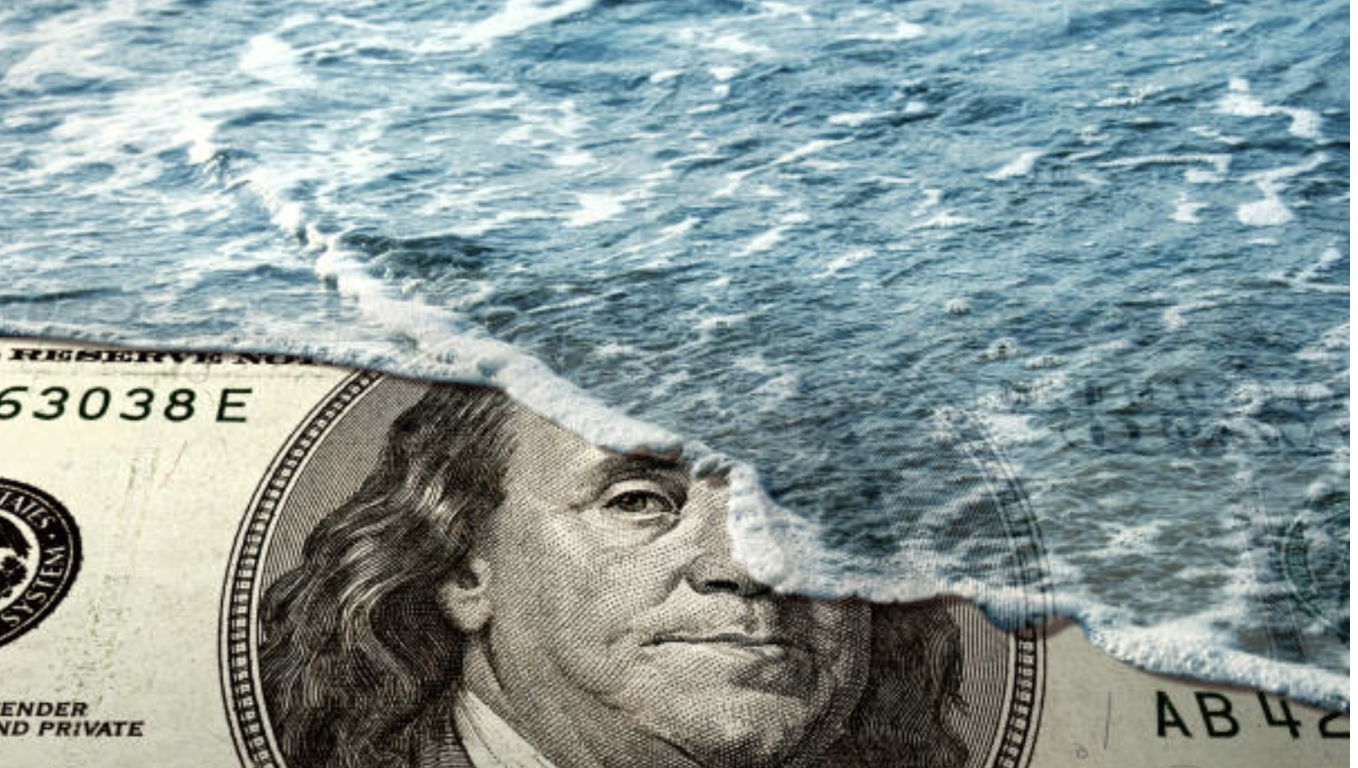
In the face of these findings, the real-world cost of climate inaction is staggering. Damage from extreme weather is projected to cost $32 billion annually across Gulf Coast states alone by 2050. And based on NOAA data, U.S. disaster spending is on track to exceed $1 trillion this decade, as increasingly unwieldy climate-fueled crises require greater spending on disaster relief, home insurance, and building materials. Despite federal government findings that every dollar spent on disaster preparedness saves $6 down the line, the Trump Administration continues to make drastic cuts to vital preparedness funding—$1.7 billion so far this year, according to FEMA.
Yet in the face of Trumpian denial and escalating risk, individuals, organizations, and companies are fighting back, reflecting a broadening resistance to climate denial.
More than 180 FEMA employees issued an unprecedented warning to Congress that inexperienced agency leadership, drastic budget cuts, and the sidelining of climate science are setting the U.S. up for more Hurricane Katrina–level disasters. Scientists are making a concerted effort to enshrine climate science in public comments on federal rules and regulations, an often overlooked yet powerful way to influence policy. Environmental groups are suing the government over weakened pollution standards, stalled resilience grants, and attempts to scrub climate science from federal decision-making. And the number of companies globally adopting science-based emission reduction goals has soared to 11,000—tripling in just 18 months.
Human Health
A new study in Nature Climate Change finds that deforestation in tropical regions has contributed to over 500,000 heat-related deaths in the past 20 years, accounting for more than one-third of the localized warming that has impacted 345 million people. (The Guardian)
The WHO warns that Chikungunya, a mosquito-borne virus causing long-term health impacts, has surged to 240,000 global cases this year—with the highest burden in Latin America—as warmer climates expand mosquito habitats. (The New York Times)
Valley fever cases in California have surged more than 1,200% since 2000, as shifting climate-driven cycles of drought and rainfall fuel the spread of the Coccidioides fungus, which can cause lifelong illness or death. (SF Gate)
Wildland firefighter crews battling toxic smoke are developing cancers, heart disease, and lung damage, yet the U.S. Forest Service continues to resist providing respirator masks despite decades of research and international examples showing they save lives. (The New York Times)
Planetary Health
The sobering new AMS State of the Climate report finds that 2024 set records for greenhouse gas concentrations, global surface temperatures, ocean heat, sea levels, and unprecedented humid-heat extremes. (Axios)
A new study mapping the effects of global warming on Antarctica warns that the rapid, potentially irreversible loss of sea ice could trigger a climate tipping point—driving sea level rise, disrupting ocean currents, and devastating marine ecosystems. (Reuters)
Wildfires have scorched more than 2.5 million acres across the EU so far in 2025—the most on record, with weeks still left in the fire season—spewing unprecedented levels of CO2, creating toxic air pollution, and devastating communities across southern Europe. (The Guardian)
Canada’s wildfires have already burned more than 18.5 million acres this year, and the government warns that the blazes could persist into the fall, keeping thousands displaced under persistently hot and dry conditions. (Reuters)
A new study finds that California’s wildfire season is now starting up to two months earlier in some regions as climate change drives hotter, drier conditions across the state. (San Francisco Chronicle)
Australia’s Great Barrier Reef has experienced its worst coral decline in nearly 40 years of monitoring, with climate-fueled heat stress identified as the primary driver, scientists report. (BBC)
A new analysis reveals that extreme heat has led to a “staggering” 25-38% decline in tropical bird populations since 1980, with birds now experiencing ten times more extreme heat days annually. (Euronews)
Equity
Extreme heat is killing hundreds of New Yorkers each summer, with Black and low-income residents facing double the risk as less tree cover, hotter streets, and limited air conditioning leave some neighborhoods up to 9°F hotter than the city average. (Inside Climate News)
Phoenix, Arizona, saw 70 days above 110°F last year, compared to fewer than 10 a century ago—and in 2024, homeless residents made up 20% of deaths at the Arizona Burn Center despite being less than 1% of the population. (The New York Times)
A new summary report concludes that tens of millions of women and children—especially in the world’s poorest regions—face escalating physical, mental, and social risks from climate change and urges countries to undertake aggressive climate adaptation plans. (Vox)
Politics & Economy
Administration Watch:
- More than 180 FEMA employees are warning that unqualified Trump appointees and program cuts are undermining the agency’s mission and could lead to a Katrina-level disaster. (The Washington Post)
- Energy Secretary Chris Wright suggested the Trump administration will issue “updated” National Climate Assessments after removing the originals from government sites. (CNN)
- The IRS issued new rules that eliminate the ability of wind and solar companies to claim federal tax breaks, a move likely to slow U.S. renewable growth. (The New York Times)
- The EPA eliminated the $7 billion Solar for All program to expand solar access for low-income households. (Canary Media)
- The Trump administration is asking NASA to draft termination plans for its two Orbiting Carbon Observatory missions that track vital climate data. (NPR)
- A new analysis found that the DOE’s recent report on the impacts of greenhouse gases on the climate contains over 100 false or misleading claims. (Carbon Brief)
- Following court losses, the Trump administration is allowing states to reapply for $5 billion in EV charging funds, but has dropped the requirement that the funds be used to expand access in disadvantaged communities. (Canary Media)
- Mr. Trump’s budget cuts are jeopardizing extreme heat programs, compounding long-standing gaps in national warnings before it gets dangerously hot. (POLITICO)
- The U.S. has withdrawn from global talks on the IMO’s net-zero shipping plan and is threatening retaliation against nations that support it. (Reuters)
- Mr. Trump is employing a “whole-of-government” strategy to target renewables, directing agencies to cut or redirect programs that support wind, solar, and battery technologies. (POLITICO)
In the first half of 2025, China’s CO2 emissions decreased by 2.7%, while U.S. emissions rose by 4.2%, reversing a decade-long trend—a shift likely influenced by China’s rapid solar expansion and a rise in U.S. coal generation. (POLITICO)
U.S. disaster costs are on track to exceed $1 trillion this decade as climate-fueled crises drive federal spending to more than $16 billion per year, while the Trump administration slashes $1.7 billion in resilience funding and weakens FEMA. (Grist)
A new analysis projects that extreme weather could cause $32 billion in annual property damage across the Gulf South by 2050 — more than double what’s expected without accounting for climate impacts. (Axios)
Two major green groups are suing the Trump administration, alleging that a secretive Department of Energy panel of climate skeptics produced a report downplaying climate risks that the EPA is now using to overturn its Endangerment Finding on greenhouse gases. (The Hill)
Action
A federal judge blocked the Trump administration from diverting over $4 billion from a FEMA program meant to help 20 states fortify infrastructure against climate-fueled floods, hurricanes, and other disasters. (Reuters)
The number of companies worldwide setting science-based emissions reduction targets has surged to 11,000—tripling in the past 18 months—signaling accelerating corporate climate ambition despite political backlash. (Business Green)
Nonprofits, tribes, and local governments have launched the first class-action lawsuit against the EPA, seeking to reinstate a $3 billion climate justice program Congress mandated but the Trump administration abruptly killed. (The Guardian)
Life as We Know It
A new study found that from 2004 to 2024, extreme weather disrupted more than 2,000 mass gatherings worldwide, with climate change causing or worsening 57% of those events. (CBC)
Kicker
Just in time for the school season, the Climate Mental Health Network is hosting a webinar for parents about how to raise resilient kids in an era of extreme weather disasters.
“If we destroy nature, we destroy ourselves.”
-Wangari Maathai
The GMMB Climate, Health & Equity Brief would not be possible without the contributions of the larger GMMB team—Catherine Ahmad, Stefana Hendronetto, Nikki Melamed, Sharde Olabanji, Kenzie Perrow, Krishna Rajpara, and Marci Welford. Feedback on the Brief is welcome and encouraged and should be sent to [email protected].