
Climate, Health and Equity Brief
New reports on pollution, climate and health
May 1, 2026
The Climate, Health & Equity Brief is GMMB’s take on the latest news on the current impacts of climate change. If you haven’t subscribed yet, you can do so by clicking here.
Hot Topic: Exposure. Several major studies and reports this month added to the evidence that fossil fuel pollution and climate change are taking a growing toll on human health.
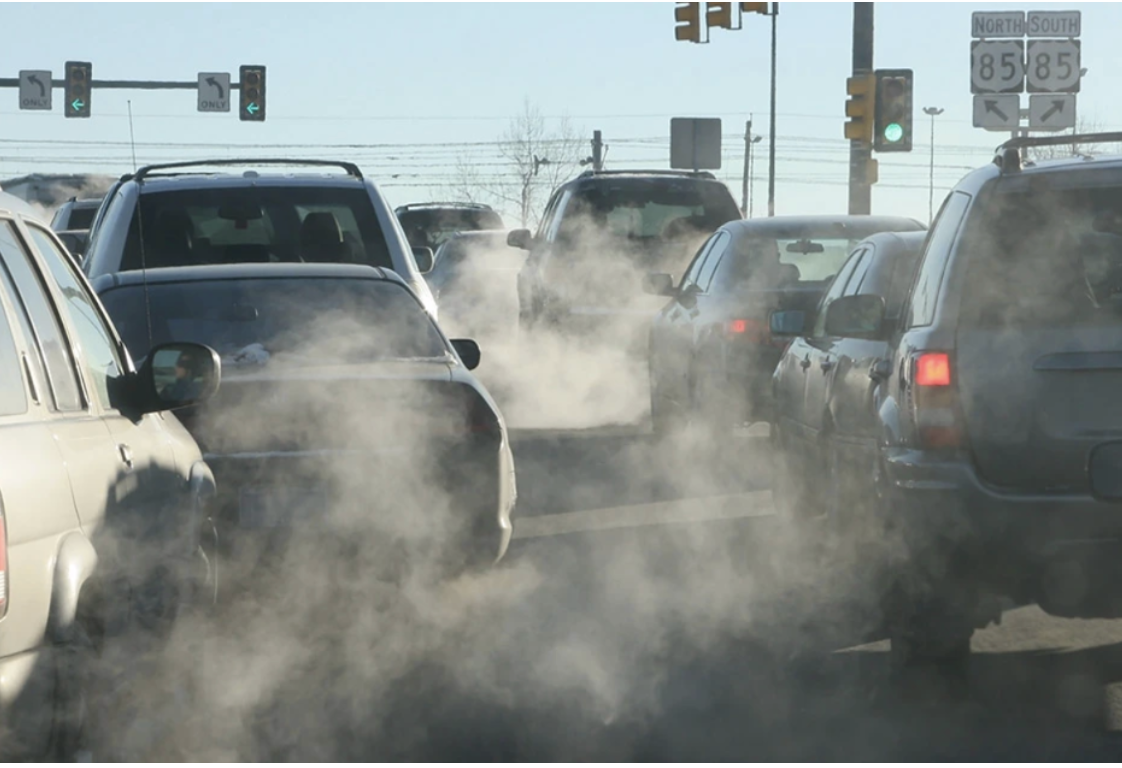
A major UK study found that air pollution is linked to the earlier onset of 46 chronic diseases spanning nearly every organ system, in some cases by more than two years. Especially surprising to scientists were the findings for neurological and psychological disorders, which made up 30% of the conditions showing accelerated onset—though others included cardiovascular diseases, respiratory ailments, digestive diseases, cancers, and other chronic illnesses.
In the US, the American Lung Association’s new State of the Air report found that 44% of Americans and 46% of children live in counties with failing grades for at least one measure of air pollution. People of color are more than twice as likely as white Americans to live in communities that fail all three major measures: short-term particle pollution, year-round particle pollution, and ground-level ozone, or smog.
Research also suggests that the emissions driving pollution and warming are degrading the nutritional quality of food. A meta-analysis of 109 studies found that nutrient concentrations across edible plants have fallen an average of 3.2% since the late 1980s, as higher CO₂ boosts carbohydrates without a corresponding rise in minerals.
And then, of course, there is heat. The new Lancet Countdown report for Europe found that heat-related deaths increased in 99.6% of monitored regions in 2015–2024 compared with 1991–2000, while daily extreme-heat health warnings rose 318% and the climate suitability for dengue transmission increased 297%. A separate study in China found that each day above 100.4°F raised the risk of heart disease by about 3%.
A new UN report, meanwhile, warned that extreme heat is increasingly threatening health through the food system itself, putting the health, livelihoods, and labor productivity of more than one billion people at risk, as some regions endure up to 250 days a year too hot for farm labor.
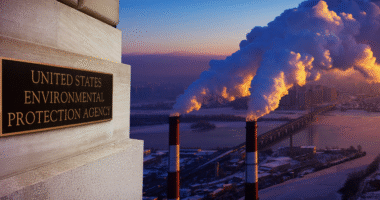
Even as evidence of these harms grows, the Trump administration is moving to weaken environmental protections. This month, Mr. Trump proposed cutting the EPA’s budget by 52% and announced plans to ease cleanup requirements for coal-ash sites, a move environmental groups say could threaten drinking water for millions.
Human Health
In the US, 44% of adults and 46% of children and teens are living in counties with at least one failing grade for air pollution, according to the American Lung Association’s 2026 State of the Air report, with communities of color bearing a disproportionate share of the burden. (Inside Climate News)
A new study of nearly 400,000 people in the UK found that air pollution—much of it linked to traffic, industry and other fossil fuel burning—accelerated the onset of 46 common chronic illnesses, sometimes by more than two years. (The Independent)
A recent meta-analysis finds that rising carbon dioxide from fossil fuels is making many staple crops less nutritious by diluting key nutrients, threatening to worsen hunger and nutrient deficiencies, especially in poorer countries. (The Washington Post)
A new UN report warns that climate-fueled extreme heat is pushing the global food system to the brink, threatening the health, livelihoods and labor productivity of more than 1 billion people. (Grist)
Europe’s latest Lancet Countdown report warns that climate change is already worsening heat deaths, disease risk, air pollution and food insecurity across the continent, even as political and public action fails to keep pace. (Euro News)
New research in the journal Neurology links spikes in air pollution, heat and UV exposure to an increase in acute migraine doctor visits and use of migraine medication, underscoring concerns that climate change could worsen migraine risk in polluted areas. (US News)
A study conducted across 157 Chinese cities and published this month in the American Journal of Preventive Medicine found that each day above 100.4°F was linked to about a 3% increased risk for heart disease. (ABC News)
A new Climate Central analysis found that in 173 of 198 US cities, pollen season has lengthened by an average of 21 days since 1970, exposing millions of Americans to longer and potentially harsher allergy seasons. (Mother Jones)
A new review of 177 studies warns that the combined effects of toxic chemicals and climate-driven heat stress may be amplifying fertility harm across humans and wildlife, potentially worsening the broader global decline in reproduction. (The Guardian)
Planetary Health
New research finds that a critical Atlantic Ocean current is 50% more likely to collapse by 2100 than thought, potentially disrupting global rainfall, causing severe European winters and droughts, and accelerating sea level rise. (The Guardian)
A new analysis finds that spring is arriving three to five weeks earlier across much of the US, increasing allergy and pest pressures, disrupting ecosystems, and leaving crops more vulnerable to damaging late freezes. (Grist)
The International Union for Conservation of Nature has officially classified emperor penguins as endangered, citing rapid population declines and climate-driven sea ice loss that threatens the birds’ breeding, molting, and feeding habitat. (The New York Times)
Equity
The Trump administration’s January cancellation of a $1 billion solar and battery program for low-income and medically vulnerable Puerto Ricans left roughly 34,000 households without backup power and transferred the funding to a government-owned utility with a history of corruption and mismanagement. (Grist)
Politics & Economy
Iran war-related disruption of global energy markets is accelerating the adoption of renewables and electric vehicles in Asia and Europe while putting new liquefied natural gas export projects at risk. (The Washington Post, Axios)
A new study finds that, globally, more crops are now grown for livestock feed and biofuels than for direct human consumption—a shift researchers say is worsening food inefficiency, undermining food security, and driving climate emissions. (Sentient Media)
A New York Times investigation found that the Supreme Court’s 2016 shadow-docket order blocking Obama’s Clean Power Plan upended US climate policy and widened its use of major decisions without full briefing or explanation. (The New York Times)
Northeastern states are retreating from their climate goals, as stalled offshore wind, rising electricity costs, and federal resistance slow plans to cut emissions and shift away from fossil fuels. (The New York Times)
Utah has become the first state to shield oil companies from climate lawsuits, with other Republican-led states and federal lawmakers following suit, just as US disaster costs hit $100 billion for the fifth time in six years. (The New York Times, The Guardian)
Rising temperatures and extreme weather are increasingly driving higher food, energy, and insurance costs, contributing to “climateflation” and adding pressure to global inflation and household budgets. (Bloomberg)
Epic US drought, fueled by the hottest September-to-February stretch on record, is battering farms, shrinking herds and pushing food prices higher, with beef already surging. (The Washington Post)
The AI surge is breathing new life into carbon capture for gas-fired data center power, even as Microsoft has paused some new carbon removal credit deals, potentially cooling a market critical to scaling CO₂ removal. (Axios, Bloomberg)
As AI-driven data center growth pushes emissions higher, Big Tech is growing quieter on climate, with Google and Meta softening their messaging and Microsoft and Amazon showing how far growth is outpacing climate promises. (Fast Company)
Delta Air Lines removed its pledge to use 10% sustainable aviation fuel by 2030 from its website and downgraded its “goal” to achieve net-zero by 2050 to an “aspiration.” (Bloomberg)
Administration Watch:
- The EPA announced it will repeal the 2024 Biden-era coal plant pollution rules, loosening oversight at hundreds of toxic waste sites. (The New York Times)
- The Trump administration has proposed cutting the EPA’s budget by 52% in FY2027. (E&E News)
- The Trump administration exempted Gulf of Mexico oil and gas drilling projects from Endangered Species Act protections. (The Guardian)
- As part of a major agency reorganization, the US Forest Service is closing 57 of its 77 research stations that study wildfire risk and climate change. (The New York Times)
- The Trump administration is holding up NOAA grant funding, jeopardizing research on weather, climate, and atmospheric monitoring. (The Hill)
- Treasury Secretary Scott Bessent dismissed climate change as an “elite belief” and urged global financial institutions to prioritize growth over climate policy. (The New York Times)
Action
For the first time ever, renewables beat natural gas as the largest source of electricity on the US grid over a full month in March, a milestone driven largely by booming solar and wind growth even as the Trump administration targets clean energy. (Canary Media)
A federal judge halted Trump administration actions that had bogged down wind and solar permitting across the country, marking another legal blow to its broader campaign against renewable energy. (The New York Times)
A federal judge rejected the Trump administration’s attempt to stop Hawaii’s climate lawsuit against major oil companies, dealing the administration its second defeat in efforts to block state-led climate action. (Inside Climate News)
Frustrated by stalled UN talks, 56 countries met in Santa Marta, Colombia, for the first global summit focused explicitly on moving away from fossil fuels, with plans for continued cooperation and momentum toward future negotiations aimed at a phaseout. (AP)
Deep-red Utah has become an unlikely clean-energy trailblazer after passing a first-of-its-kind law legalizing plug-in solar, part of a broader push in more than 30 states to expand low-cost, portable rooftop power. (Grist)
With 82 percent of Baltimore’s Inner Harbor facing flood risk within 30 years, church congregations are implementing nature-based solutions like rain gardens and mini forests to build climate resilience. (Inside Climate News)
Life as We Know It
As warming winters make traditional outdoor rinks harder and costlier to maintain, some hockey venues are turning to synthetic plastic ice—a workaround that raises new environmental concerns about plastics and microplastics. (The New York Times)
Kicker
Click through this immersive infographic from Nature Climate Change for a striking look at how much the climate has changed since the journal launched 15 years ago.
“The health benefits of a fossil fuel phase-out are profound.”
-Ed Maibach, Global Climate and Health Alliance
The GMMB Climate, Health & Equity Brief would not be possible without the contributions of the larger GMMB team—Catherine Ahmad, Stefana Hendronetto, Nikki Melamed, Kenzie Perrow, Krishna Rajpara, and Marci Welford. Feedback on the Brief is welcome and encouraged and should be sent to [email protected].