
Climate, Health and Equity Brief
El Niño in a Warming World
June 26, 2026
The Climate, Health & Equity Brief is GMMB’s take on the latest news on the current impacts of climate change. If you haven’t subscribed yet, you can do so by clicking here.
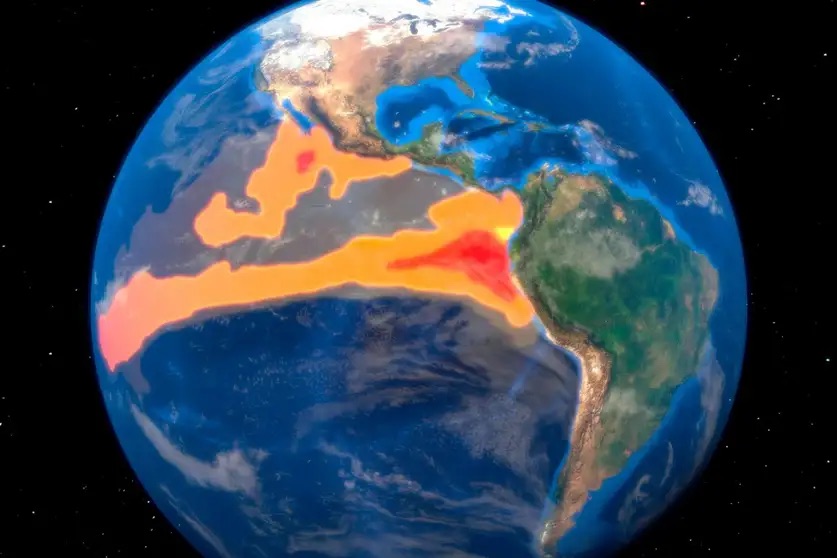
Hot Topic: Baseline. NOAA declared this month that El Niño has officially formed in the tropical Pacific and is expected to strengthen into winter, with a 63% chance of becoming “very strong.” El Niño is a natural climate pattern. The danger is the baseline it is arriving on.
Every few years, trade winds weaken, and unusually warm water spreads across the central and eastern Pacific, releasing vast amounts of stored ocean heat into the atmosphere and altering rainfall, heat, and storm patterns around the world. No two El Niño events are the same, and the pattern does not guarantee disaster in any one place. But it can shift the odds toward more dangerous heat, deeper drought in some regions, heavier rain in others, and broader disruptions to food and water systems.
Climate change does not cause El Niño, but warmer oceans and a warmer atmosphere can intensify the extremes it helps trigger. While El Niño is temporary, other climate baselines continue to worsen: Just this month, a new UN report warns that the rate of global sea level rise has more than doubled since 2015.
This year, climate risks are colliding with other shocks. Experts say that El Niño-linked extreme weather, combined with fuel, fertilizer, and shipping disruptions tied to the Iran war, could push more than 100 million people toward a major hunger crisis by year’s end. Higher fuel and fertilizer costs make it more expensive to plant, irrigate, and transport crops. Extreme heat, drought, and flooding can reduce yields, and humanitarian groups are facing higher delivery costs just as aid budgets are shrinking.
Because food markets are global, climate shocks in one region can ripple outward through higher prices for staples and widely traded commodities. Experts say a strong El Niño could threaten cocoa, coffee, and sugar crops already vulnerable to shifts in rainfall and heat. El Niño can also disrupt fisheries by suppressing the cold, nutrient-rich ocean upwelling that supports marine food chains off the Pacific coast of South America.
All of this makes climate intelligence more important, not less. Yet in recent weeks, the Trump administration moved to dismantle the Ocean Observatories Initiative, a major ocean-monitoring network, before reversing course after outcry from scientists and lawmakers. Meanwhile, the contrast with other countries is stark: while the U.S. nearly pulled apart a system that helps track ocean conditions, the EU is investing in ocean monitoring to improve forecasting and preparedness.
El Niño will pass, but the hotter baseline will remain. The difference between warning and crisis is whether leaders protect the tools that help communities see what is coming and act before the damage is irreversible.
Human Health
Experts warn that what could be the strongest El Niño on record—combined with fertilizer shortages and surging prices from the Iran war and historically low international aid—could push more than 100 million people into a major hunger crisis by year’s end. (The New York Times, The Washington Post)
A new UNICEF report finds that half of the world’s children — more than one billion — are exposed to at least three overlapping climate hazards, including heatwaves, storms, floods, and droughts. (The Guardian)
Planetary Health
The UN’s third World Ocean Assessment found that the rate of sea level rise has more than doubled since 2015 and warned that the world’s oceans face “severe and accelerating” pressure from human activities. (The Guardian)
Sea level rise could flip mangrove forests—which store 15% of ocean carbon despite covering less than 1% of Earth’s surface —from carbon sinks to emission sources, according to a new study. (Inside Climate News)
A new study finds a severe reduction of nitrate due to the loss of sea ice—the nutrient base of the entire marine food chain—threatening fish populations, commercial fisheries, and the ocean’s ability to absorb carbon. (LiveScience)
Equity
According to the UN, climate disasters have displaced over 250 million people in the past decade, yet the Trump administration is blocking them from entering the U.S. since neither U.S. nor international law recognize climate displacement as asylum grounds. (The Guardian)
A new study finds that disparities in income, education, and health significantly increase vulnerability to climate disasters, with lower-income regions facing more severe impacts from the same hazards. (Phys.org)
Politics & Economy
Despite a federal judgment that the Trump administration cannot dismantle the National Center for Atmospheric Research, it was effectively eliminated through staff departures, equipment sales, and paused projects before the judicial system could act. (POLITICO)
The Bonn climate talks ended with modest progress on a Just Transition and a new global electrification proposal ahead of COP31, but stalled adaptation finance negotiations, exposed widening divides as wealthy nations face pressure not to backslide on climate commitments. (Euronews)
As climate attribution science increasingly links fossil fuel pollution to specific disasters and billion-dollar liability lawsuits, oil industry allies are working to discredit a forthcoming National Academies report that could strengthen cases against Exxon Mobil and other energy giants. (POLITICO)
As data center demand surges in Virginia, Microsoft is considering abandoning its goal to power operations with 100% clean energy by 2030, with the company and other tech giants turning to fossil fuels despite the state’s own climate commitments. (Inside Climate News)
Data center lobbyists are urging EU policymakers to temporarily lean on gas power plants to support AI expansion, arguing renewable infrastructure isn’t ready to meet demand or sustain competitiveness with the U.S. and China. (POLITICO)
The EU plans to grant chemical producers and heavy industries additional free CO₂ permits as soon as this year to boost competitiveness globally, loosening climate change policies and risking higher emissions. (Reuters)
A London Climate Action Week panel on extreme heat was cancelled this week due to extreme heat, as Britain recorded its hottest June temperatures on record. (Reuters)
Administration Watch:
- Facing bipartisan backlash and a unanimous Senate vote, the Trump administration paused its plan to dismantle a $368 million ocean monitoring system that tracks climate change, extreme weather and marine ecosystems. (The New York Times)
- Mr. Trump approved $700 million to build the first two new coal-burning power plants and upgrade 12 existing plants. (The New York Times)
- The Trump administration awarded $18.5 million to a MAGA activist and organizer with no energy experience to build the nation’s first new coal plant since 2013. (POLITICO)
- The Energy Department issued guidance preventing states from using $8.8 billion in federal rebate funds to help people replace gas appliances with electric alternatives. (The New York Times)
- The Justice Department is seeking to halt an air pollution lawsuit against xAI’s data center, citing national security concerns and asserting federal power to block citizens’ environmental suits. (The New York Times)
- The Trump administration is planning to allow off-road vehicles across tens of millions of acres of public lands and national parks, fragmenting wildlife habitats, damaging waterways, and destroying ecosystems. (The Guardian)
Action
After federal climate sites were shut down by Mr. Trump, former NOAA staff have rebuilt a near-clone of climate.gov as a public, independent archive, restoring access to decades of U.S. government climate data, assessments, and disaster research. (The New York Times)
A federal judge ordered the restoration of signage the Trump Administration removed from over 430 national parks for “casting America in negative light,” including accurate historic references to climate change, slavery, Indigenous history, and LGBTQ+ topics. (Los Angeles Times)
Scientists have built the first global early warning system that forecasts when and where animals will face unprecedented heat up to nine months in advance, identifying more than 3,500 species at risk — including 1,250 already endangered. (Earth.com)
The EU pledged $107 million in ocean monitoring to strengthen climate forecasting and study changing marine ecosystems. (The New York Times)
China has set a strict 2028 deadline for nine heavy industries, including steel, cement, and coal-fired power, to meet energy efficiency benchmarks, with less than 30% of production capacity currently meeting top-tier standards. (S&P Global)
A coalition of renewable energy groups sued the Pentagon to resume military project reviews of onshore wind projects, which stopped in April, stalling more than 106 planned wind farms representing $47 billion in investment across 21 states. (The New York Times)
As other billionaire philanthropists retreat from climate giving, Michael Bloomberg is committing $590 million to accelerate clean energy, protect oceans, and improve air quality worldwide. (The New York Times)
Life as We Know It
Climate change is driving up the cost of living for U.S. households, with new research showing that 67% of voters link it to rising expenses and economists estimating it resulting in an increase of up to $900 per household annually. (TIME & Grist)
FIFA’s new World Cup hydration breaks, introduced as a safety measure amid rising heat, have sparked backlash from fans and players who see them as disruptive and potentially driven more by commercial gain than climate concerns. (Grist)
A new British Geological Survey analysis warns that climate-driven hotter, drier summers could put more than 1.8 million homes at risk from shrinking and shifting soil by 2070, with London, Essex, and Kent among the most vulnerable areas. (The Guardian)
Kicker
Following the World Cup? Enter your favorite team to explore how heat could slow down player performance across specific 2026 World Cup matches. (Climate Central)
“El Niño conditions will pour fuel on the fire of a warming world.”
– António Guterres, U.N. Secretary General
The GMMB Climate, Health & Equity Brief would not be possible without the contributions of the larger GMMB team—Catherine Ahmad, Stefana Hendronetto, Nikki Melamed, Kenzie Perrow, Krishna Rajpara, and Marci Welford. Feedback on the Brief is welcome and encouraged and should be sent to [email protected].