
Climate, Health and Equity Brief
News to Fuel the Fight
May 29, 2026
The Climate, Health & Equity Brief is GMMB’s take on the latest news on the current impacts of climate change. If you haven’t subscribed yet, you can do so by clicking here.
Hot Topic: Bending the curve. Some recent good news: the IPCC is poised to retire the very worst-case climate scenario — known as RCP 8.5 — which projected that with unabated greenhouse gas emissions, massive coal expansion, and zero climate action through the 21st century, temperatures could rise 4°C (7.2°F) or more by 2100.
Some have seized on this news to claim that scientists were wrong or that climate risks were overstated. But the real lesson is that climate action works. Rapid clean-energy growth, declining coal use, stronger climate policies and lower long-term projections for fossil fuel demand have helped make the worst-case emissions pathway less likely — proof that the climate future is still ours to shape.
In 2025, clean power grew fast enough to exceed the entire rise in global electricity demand. Renewables generated more electricity globally than coal for the first time in the modern power era. And global investment in clean energy reached roughly twice the level of fossil-fuel investment.
Those are advances worth celebrating.
Yet we know the problem is far from solved. A new World Meteorological Organization report says there is a 91% chance that global temperatures will temporarily exceed 1.5°C (2.7°F) above preindustrial levels in at least one of the next five years — crossing a key global threshold associated with greater climate risk.
Experts have urged the World Health Organization to issue its highest-level health alert on climate change now because of the threats extreme heat, disease, food insecurity, and air pollution already pose to human life and livelihoods in many parts of the world. Yet this month alone, the EPA has moved to ease vehicle pollution standards, relax restrictions on “super pollutant” HFC refrigerants, and speed approvals for power plants and other major industrial projects.
The fading plausibility of the very worst-case climate scenario shows real progress, but it does not grant us a reprieve. It proves that climate-smart policy, technology, and investment are working — which makes the rollback of climate safeguards in the U.S. a direct assault on the very forces that have begun to bend the curve.
Human Health
New satellite-based research finds that invisible, wildfire-driven ground-level ozone is killing an estimated 2,045 people a year on average in the U.S., with deaths rising from about 100 in 2006 to nearly 10,000 in 2023 as climate change fuels more fire pollution. (Space.com)
Experts say climate change and related drought, intense rainfall, and wildfires are helping hantavirus-carrying rodents spread into new areas of Argentina, where cases have nearly doubled this season, and 32 people have died. (CNN)
A UC Davis study found that climate change will drive rodent-borne arenaviruses—which cause hemorrhagic fevers with 5-30% fatality rates—into new South American regions, exposing millions of people to deadly pathogens for the first time. (Phys.org)
An independent commission is urging WHO to declare climate change a public health emergency of international concern, the highest level of health alert, citing climate-fueled extreme heat and weather, diseases, food insecurity, and air pollution as threats to human life. (The Guardian)
Planetary Health
A World Meteorological Organization report a 91% chance that in at least one of the next five years, Earth will shoot past the 1.5°C (2°7 F) Paris Agreement threshold and an 86% chance that one of those years will smash the record for Earth’s hottest year. (AP)
A new study warns that New Orleans has reached a “point of no return,” with sea-level rise, coastal erosion, and sinking land potentially leaving parts of the city surrounded by the Gulf of Mexico within decades—making immediate planning for managed relocation “essential.” (The Guardian)
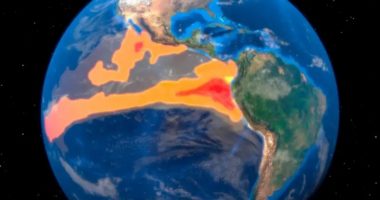
Fueled by climate change, a massive marine heatwave stretching from California to Hawaii and British Columbia is driving “shockingly extreme” weather across the U.S. and could combine with El Niño this summer to bring record heat, intensify wildfires, and disrupt marine ecosystems. (The Guardian)
A new study predicts that 7% to 16% of the world’s plant species could lose at least 90% of their habitat and become essentially extinct by century’s end as warming temperatures and shifting precipitation patterns erase the conditions they need to survive. (AP)
Despite Amazon deforestation hitting an eight-year low from August 2025 to March 2026, Amazon wildfires surged 30 percent in early 2026, with new research warning that climate change and forest loss could trigger an irreversible ecosystem collapse within 25 years. (Inside Climate News, The New York Times)
NOAA forecasts that Lake Powell, a critical Colorado River reservoir that serves tens of millions of people, will receive just 13% of its normal spring runoff—the lowest inflow on record—threatening to halt hydropower generation by September. (The Colorado Sun)
New research finds that accelerating glacier retreat is heightening Arctic landslide and tsunami risks, just as Alaska’s 2025 Tracy Arm fjord mega tsunami—taller than the Empire State Building—narrowly missed tour boats. (The Guardian)
A new WMO report finds that Latin America and the Caribbean are experiencing “hydrological whiplash” in which droughts alternate with intense downpours that cause floods and landslides without replenishing reservoirs or depleted soils. (Inside Climate News)
Equity
As groundwater levels drop due to climate-fueled megadrought and a record-low snowpack, 25% of private well water samples tested in San Luis Valley—one of the poorest rural areas of Colorado —contain unsafe arsenic levels that will require expensive filtration systems to treat. (The Columbia Chronicle)
An unusual early-season heat wave pushed much of India above 100°F in April, straining a country of more than 1.4 billion people where only 8% of households have AC and roughly 75% of workers labor in heat-exposed fields such as agriculture and construction. (Inside Climate News)
Politics & Economy
The Trump administration’s emergency orders forcing five aging coal plants to stay open have already cost hundreds of millions of dollars to ratepayers, with multiple states now challenging the orders in federal court. (The New York Times)
Major automakers are pivoting away from EVs and toward manufacturing battery energy storage systems for utilities, industrial customers, and data centers, capitalizing on shifting federal incentive programs and the AI boom. (Wired)
As the Iran war drives up oil prices and disrupts global supply, households, industries, and governments are cutting fossil fuel use, boosting transit and clean-energy adoption, and potentially accelerating a lasting decline in oil demand. (Grist)
Administration Watch:
- The EPA is accelerating permit reviews for major industrial facilities and power plants to ease environmental regulations and speed energy development. (Reuters)
- The EPA has proposed delaying enforcement of stricter vehicle pollution standards until 2029. (Reuters)
- The EPA is easing restrictions on HFC superpollutants for grocery stores and AC companies, which critics warn could boost climate pollution from powerful HFCs. (The Guardian)
- The EPA has proposed easing rules that limit toxic pollutants in groundwater and waterways at coal-fired power plants. (The New York Times)
- The EPA plans to roll back drinking-water limits on four PFAS “forever chemicals” that have been linked to cancers, immune suppression, and developmental harm. (The New York Times)
- A Trump-appointed FEMA review panel has recommended limiting federal disaster aid and shifting more recovery costs and responsibilities to state and local governments. (The New York Times)
Action
In a sign that clean energy and policy have lowered the risk of runaway warming, scientists are poised to retire the worst-case RCP 8.5 climate scenario, though they warn that the world is still on track for dangerous climate harms unless emissions are drastically cut. (The Washington Post)
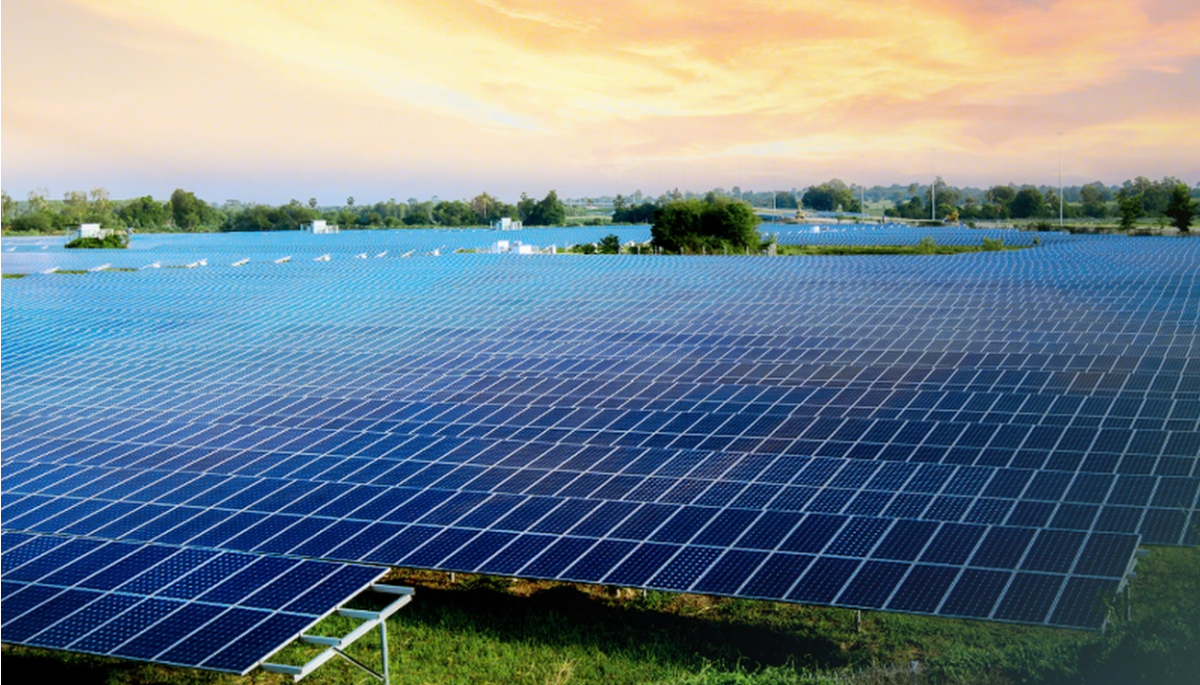
A new outlook from the U.S. Energy Information Administration forecasts that electric power generation from utility-scale solar will outproduce coal power generation in Texas for the first time in 2026. (Reuters)
Life as We Know It
Interest in eco-friendly death practices is rising amid rising concerns about the climate and environmental impacts of conventional burial and cremation. (AP News)
Kicker
Just in time for hurricane season, which officially kicks off June 1, Climate Mental Health Network is releasing important new resources to help people navigate the emotional impacts of extreme weather events.
“Despite the progress of recent years…every nation is already paying a huge price from this global climate crisis.”
-Simon Stiell, U.N. climate chief
The GMMB Climate, Health & Equity Brief would not be possible without the contributions of the larger GMMB team—Catherine Ahmad, Stefana Hendronetto, Nikki Melamed, Kenzie Perrow, Krishna Rajpara, and Marci Welford. Feedback on the Brief is welcome and encouraged and should be sent to [email protected].